Bangladesh-Japan to ink EPA on Friday
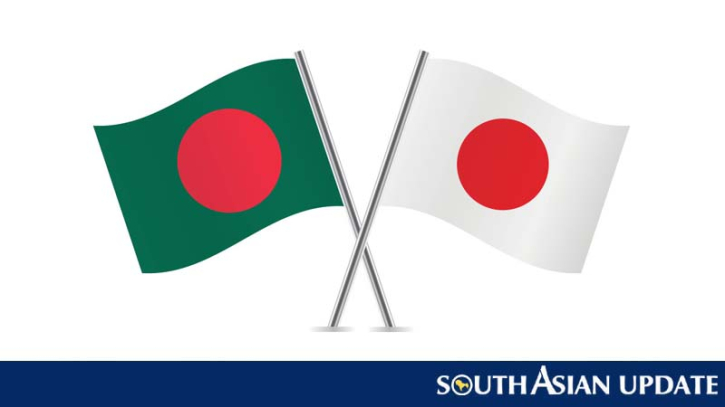
Bangladesh is poised to sign a far-reaching Economic Partnership Agreement with Japan on Friday, a move seen as crucial for safeguarding the country’s export competitiveness as it prepares to graduate from least developed country (LDC) status later this year.
The deal, formally titled the Bangladesh-Japan Economic Partnership Agreement (BJEPA), will be signed in Tokyo by Bangladesh’s commerce adviser, with the commerce secretary accompanying the delegation. Officials said the agreement will come into effect shortly after signing, with the adviser expected to return to Dhaka on February 7.
This will be Bangladesh’s first comprehensive bilateral trade agreement and is being described by policymakers as a strategic lifeline ahead of LDC graduation on November 24, when existing preferential market access schemes are set to expire.
Under the agreement, Japan will grant immediate duty-free access to 7,379 Bangladeshi products, including a wide range of readymade garments, leather goods, pharmaceuticals and agro-processed items. In return, Bangladesh will allow duty-free entry for 1,039 Japanese products, largely industrial inputs, machinery and high-value consumer goods.
A major boost for the apparel sector is Japan’s acceptance of a “single-stage transformation” rule, allowing Bangladeshi garment exporters to source fabrics from any country while still qualifying for duty-free access, as long as final production takes place in Bangladesh.
The agreement also extends beyond goods trade. Japan will open 120 services sub-sectors to Bangladeshi professionals, while Bangladesh will liberalise 97 services sectors for Japanese companies, covering areas such as logistics, engineering, ICT and financial services.
Officials said the BJEPA is expected to significantly increase Japanese foreign direct investment, particularly in automotive components, electronics, renewable energy and high-end manufacturing zones.
With experts warning that Bangladeshi exports could face tariffs of up to 18 percent in major markets after LDC graduation, the agreement makes Japan’s duty-free access legally binding and long-term.
.png "Advertisement")