US, India urge UN sanctions on terror groups
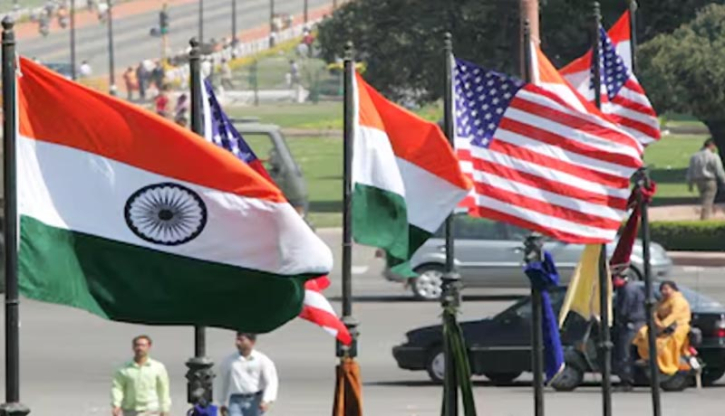
The United States and India have jointly pressed the United Nations to impose new sanctions on affiliates of the Islamic State (IS) group and Al Qaeda, as well as on South Asia–focused militant outfits Lashkar-e-Taiba (LeT), Jaish-e-Mohammad (JeM) and what they described as their associated proxy networks.
In a joint statement, Washington and New Delhi called for action under the UN Security Council’s 1267 sanctions regime, which provides for a global asset freeze, travel ban and arms embargo against designated individuals and entities. The move underscores deepening counterterrorism cooperation between the two strategic partners amid renewed concerns over cross-border militancy.
LeT and JeM were formally banned by Pakistan in 2002, but India has repeatedly accused both groups of continuing to operate from Pakistani territory. allegations Islamabad has consistently denied. Notably, the joint statement stopped short of naming Pakistan, a silence that has drawn attention given New Delhi’s long-standing position on the issue.
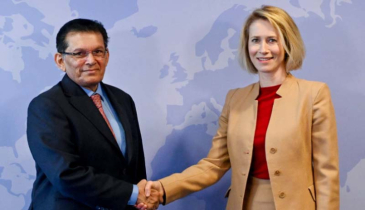
The talks were led by Monica Jacobsen from the US State Department’s Bureau of Counterterrorism and India’s Counterterrorism Joint Secretary Vinod Bahade. Both sides highlighted closer collaboration in areas including counterterrorism training, cybersecurity, intelligence-sharing, judicial coordination and mutual legal assistance to disrupt extremist financing and recruitment networks.
The delegations strongly condemned recent attacks, including the April 22 Pahalgam incident in Jammu and Kashmir and the November 10 attack near the Red Fort in New Delhi, stressing that those responsible for acts of terrorism must be brought to justice regardless of location or affiliation.
The statement also welcomed Washington’s designation of The Resistance Front (TRF) as both a Foreign Terrorist Organisation and a Specially Designated Global Terrorist entity. India has accused TRF of carrying out the Pahalgam attack, describing it as a front organisation linked to banned militant groups.
Analysts say the absence of any direct reference to Pakistan reflects a calibrated US approach, aimed at strengthening counterterrorism ties with India while preserving diplomatic flexibility with Islamabad.
Against this backdrop, the joint push at the UN signals Washington and New Delhi’s intent to elevate multilateral pressure on militant groups, even as regional geopolitics continue to shape how forcefully such efforts are pursued.
.png "Advertisement")