Pakistan strikes $4b deal to sell weapons to Libyan force
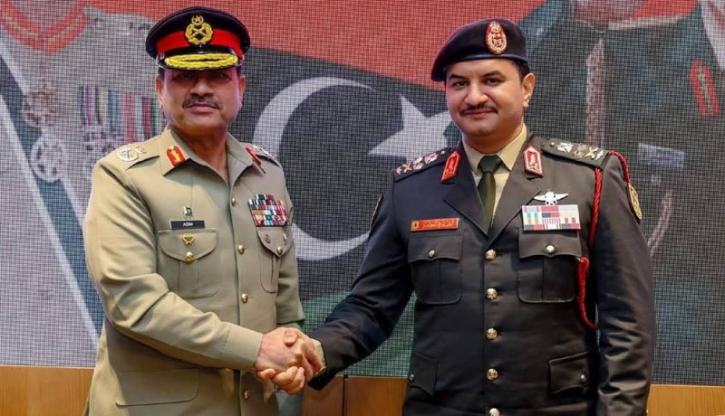
Pakistan has struck a weapons sale agreement worth more than $4 billion with Libya’s eastern-based Libyan National Army (LNA), Pakistani officials said.
The deal was finalised following talks last week in Benghazi between Pakistan’s army chief, Field Marshal Asim Munir, and Saddam Khalifa Haftar, the deputy commander-in-chief of the LNA and son of its leader, Khalifa Haftar. Four Pakistani officials familiar with the negotiations confirmed the agreement, speaking on condition of anonymity because of the sensitivity of the transaction.
If implemented, the agreement would rank among Pakistan’s largest-ever defence export deals. Documents seen by media ahead of finalisation indicate that the package includes 16 JF-17 Thunder fighter jets, jointly developed by Pakistan and China, along with 12 Super Mushak trainer aircraft used for basic flight instruction. Officials said the deal also covers a broader range of land, naval and air defence equipment to be delivered over roughly two and a half years.
Two officials put the total value at more than $4 billion, while others estimated it at around $4.6 billion. Beyond weapons sales, the agreement is expected to include provisions for joint training, technical support and possible defence manufacturing cooperation.
The LNA’s official media outlet announced a new phase of military cooperation with Pakistan on Sunday, with Haftar describing the pact as a strategic partnership, though no specific details were disclosed.
Libya has remained divided since the 2011 NATO-backed uprising that toppled Muammar Gaddafi. The UN-recognised Government of National Unity, led by Prime Minister Abdulhamid Dbeibah, governs much of western Libya, while Haftar’s forces control the east and south, including key oil-producing regions.
Any arms transfer to Libyan factions faces close international monitoring, as the UN arms embargo remains formally in place amid concerns that new weapons could further destabilise the conflict-scarred country.
.png "Advertisement")