Myanmar's opium poppy cultivation hits highest level in a decade: UN
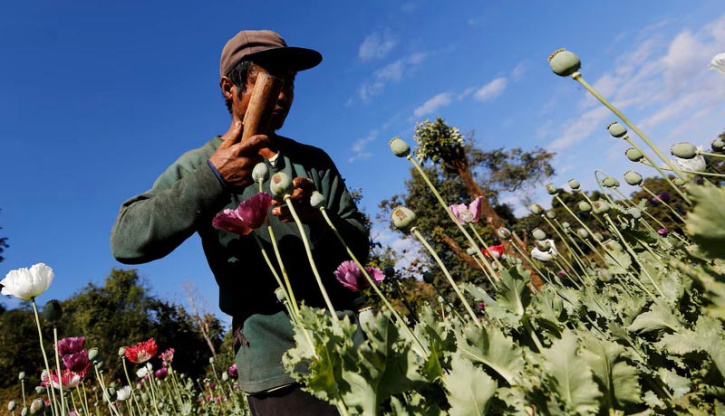
Opium poppy cultivation in Myanmar has expanded to its highest level in ten years, rising sharply as escalating conflict, economic desperation and weak state control push more rural communities into the narcotics trade, the United Nations warned on Wednesday.
According to a new report from the UN Office on Drugs and Crime (UNODC), poppy cultivation grew 17% over the past year — climbing from 45,200 hectares in 2024 to 53,100 hectares in 2025 — cementing Myanmar’s position as the world’s leading source of illicit opium following a steep decline in Afghanistan’s production.
UNODC officials said the data reflects a major resurgence of Myanmar’s opium economy, which had previously contracted but is now rebounding rapidly as war and state instability worsen.
“Myanmar stands at a critical moment,” said Delphine Schantz, UNODC representative for Southeast Asia and the Pacific. “The scale of expansion shows how deeply entrenched the opium economy has become again, and how much room there is for further growth if current conditions continue.”
Myanmar has been engulfed in turmoil since the military coup in February 2021 ousted the elected government of Aung San Suu Kyi and triggered widespread armed resistance. The ruling junta is pushing ahead with a controversial national election scheduled to begin on December 28, even as large parts of the country remain active battlegrounds.
The UN report shows opium cultivation has risen steadily since 2020, driven by soaring opium prices — which have doubled in four years — and the collapse of local economies where conflict has cut off legal livelihoods.
Eastern Shan State recorded the largest increase, with cultivation rising 32%, followed by Chin State at 26%. Southern Shan State remains the country’s primary growing zone, accounting for 44% of Myanmar’s total poppy fields. All three regions are currently scenes of intense fighting between the military and ethnic armed groups.
For the first time, researchers also documented poppy cultivation in northern Sagaing Region near the Indian border, identifying 552 hectares — a sign that poppy-growing is spreading into new territories.
UNODC warned the expansion into western border areas could have serious implications for neighbouring countries, including India and Bangladesh, as trafficking routes evolve alongside shifting conflict dynamics.
.png "Advertisement")