China rejects Trump's Greenland claim, defends Arctic role
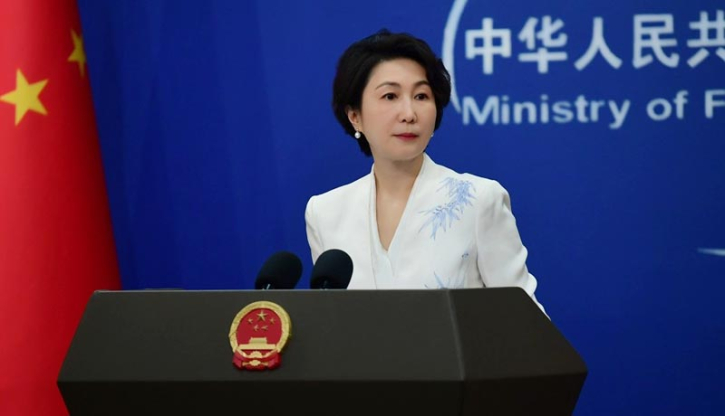
China on Monday urged the United States not to use other countries as an excuse to pursue its own interests, after US President Donald Trump said the US needed to own Greenland to prevent Russia or China from occupying it in the future.
Speaking at a regular press briefing in Beijing, Chinese Foreign Ministry spokesperson Mao Ning said the Arctic is a region of shared global interest and should not be dominated by the geopolitical calculations of any single country. She stressed that China’s engagement in the Arctic is guided by principles of cooperation, peace and sustainable development.
'The Arctic concerns the overall interests of the international community,' Mao said, adding that China respects international law and existing governance frameworks in the region. She emphasised that Beijing’s activities are transparent and focused on scientific research, environmental protection, climate change monitoring and the development of Arctic shipping routes under lawful conditions.
Mao also urged all countries to respect the legitimate rights and freedoms of Arctic and non-Arctic states to conduct lawful activities in the region, warning against turning the Arctic into an arena for confrontation or bloc politics.
Trump’s comments, made during a recent political event, revived earlier suggestions from his presidency that the United States should acquire Greenland, a self-governing territory of Denmark, citing national and economic security concerns. The remarks drew swift reactions from Copenhagen and Nuuk, both of which have repeatedly rejected any notion of selling or transferring sovereignty over the island.
China has increasingly been labelled a “near-Arctic state” and has expanded its presence through research stations, icebreaker missions and investments linked to the so-called Polar Silk Road. Western officials have voiced concerns that such activities could have strategic or military implications, claims Beijing has consistently denied.
Analysts say the latest exchange reflects intensifying great-power rivalry in the Arctic, driven by melting ice, new shipping lanes and access to critical natural resources, as global powers seek to secure long-term influence in the rapidly changing region.
.png "Advertisement")